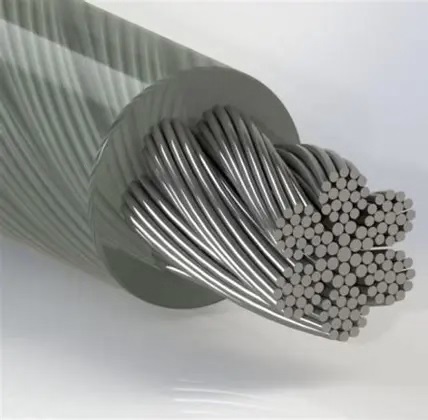
Plastic-coated wire rope (also known as PVC/PE-coated wire rope) is manufactured by taking a steel wire rope as the core and applying a uniform layer of molten plastic over its exterior using a specialized coating machine. This creates a smooth, wear-resistant, and corrosion-resistant protective sheath. Common coating materials include PVC and PE.
The core wire rope is typically galvanized; the zinc layer provides rust protection, while the outer plastic layer acts as a secondary seal. This type of rope is often used in applications requiring electrical conductivity or specific frictional properties. Uncoated (bright/polished) steel wire rope is generally not used as the core.
PVC (polyvinyl chloride) is relatively inexpensive and suitable for most general-purpose applications. PE (polyethylene) is 30–50% more expensive than PVC and is primarily used for subsea cables, lifting ropes, and long-term outdoor installations.
The standard designation for plastic-coated wire rope is: [Diameter of the steel wire rope] + [Thickness of the plastic coating]. For example: φ6+2: A 6mm diameter steel wire rope with a 2mm plastic coating, resulting in an overall finished diameter of 8mm.
Typical applications based on coating thickness and wire rope diameter:
1.0–1.5mm coating, φ3–φ6 rope: Clotheslines, display racks, fencing.
1.5–2.0mm coating, φ6–φ10 rope: Lashing/securing, guardrails, agricultural use.
2.0–3.0mm coating, φ10–φ16 rope: Docks, marine applications, long-term outdoor use.
3.0–4.0mm coating, φ16–φ24 rope: Port operations, underwater use, environments with high corrosion risk.
Advantages:
Attractive appearance: Available in colors like black, green, or transparent; unlike uncoated wire rope, it does not have an oily or greasy look.
Clean to handle: There is no surface grease, so it does not leave residue on your hands.
Dual-layer corrosion protection: The combination of a zinc coating and a plastic sheath provides a double layer of defense.
Wear resistance: The plastic layer is more resistant to abrasion than the steel wires themselves, preventing the rope from fraying or "fuzzing" when dragged across surfaces like concrete. Resistance to acids and alkalis: PVC generally offers resistance to weak acids and weak alkalis, while PE provides superior corrosion resistance.
Disadvantages:
If the plastic coating is scratched and water enters—but cannot escape—the steel wire rope will rust even more rapidly.
Poor high-temperature resistance: PVC begins to soften above 60°C, while PE begins to deform above 80°C.
Reduced flexibility, making it difficult to use over small pulleys.
Because of the plastic outer coating, it is impossible to visually detect broken wires or rust on the inside.